
School of Business IPB Enhances Student Preparedness through the “Life Ready: Basic Life Saving & Emergency Awareness” Training
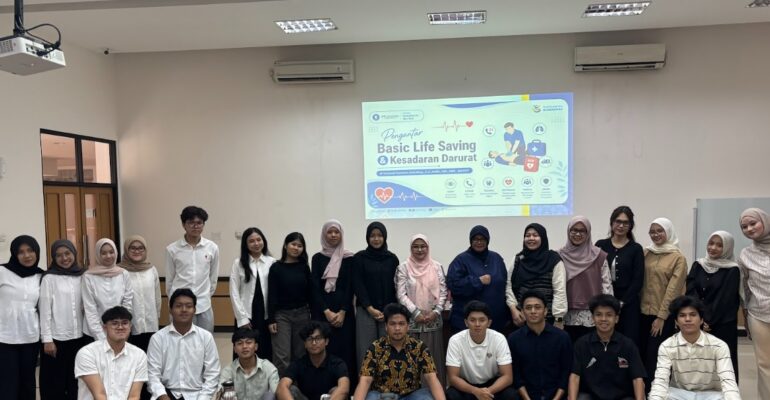
School of Business IPB Enhances Student Preparedness through the “Life Ready: Basic Life Saving & Emergency Awareness” Training
OGOR — The School of Business IPB organized the “Life Ready: Basic Life Saving & Emergency Awareness” training as part of the Softskill Grant Program series on Friday, May 8, 2026, at the Gardenia Room of SB IPB. The activity, held from 1:30 PM to 3:30 PM WIB, was attended by 27 undergraduate students as an effort to improve preparedness, safety literacy, and basic understanding of emergency response within the campus environment.
The event was officially opened by Dr. Zenal Asikin. In his remarks, he explained that the Softskill Grant Program has now entered its third-year batch as part of the institution’s commitment to supporting comprehensive student competency development, not only in academic aspects but also in strengthening practical skills, preparedness, leadership, and students’ adaptive abilities in facing various situations both on campus and in society.
Before the training session began, participants received an explanation regarding the rules and implementation mechanism of the activity delivered by Dr. Fithriyyah Shalihati. Participants then completed a pre-test to identify their initial level of understanding regarding the basic concepts of Basic Life Saving and emergency response management.
The training materials were delivered by dr. Yuliawati Kusumaningrum, who discussed the fundamental concepts of emergency conditions and the principles of Basic Life Saving. In her presentation, she explained that emergency conditions involve acute disturbances in the body’s vital functions related to Circulation, Airway, and Breathing (CAB), requiring fast and appropriate action to minimize the risk of death or permanent disability.
Participants also gained an understanding of the importance of emergency preparedness for university students. A campus environment with dynamic academic and non-academic activities carries the potential for various emergency situations, making it essential for students to possess basic skills in identifying critical conditions, conducting initial assessments, and providing first responses before advanced medical assistance becomes available.
In addition to discussing the concept of the golden time and signs of emergency conditions, participants also learned about the CAB principles (Circulation–Airway–Breathing), initial victim assessment, and the Chain of Survival procedure in handling emergency situations.
As part of a participatory learning approach, the activity continued with Focus Group Discussion (FGD) sessions and simulations of various emergency scenarios. Participants were divided into several groups to analyze emergency situations that could potentially occur both on campus and in daily life, followed by discussions on appropriate initial response measures based on Basic Life Saving principles. Through this approach, students were encouraged to develop critical thinking, communication, decision-making, and teamwork skills in handling emergency situations systematically and effectively.
Through this activity, the School of Business IPB hopes that students will not only possess academic competence, but also preparedness, social awareness, and basic emergency response skills that can be effectively applied in everyday life.
Editor: Hapriza Aprilia