
SB IPB Strengthens Students’ Emergency Preparedness through Basic Life Support Training
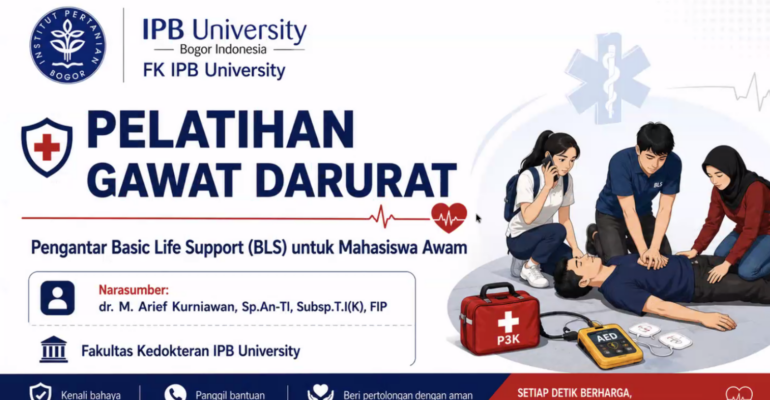
SB IPB Strengthens Students’ Emergency Preparedness through Basic Life Support Training
Bogor, 23 Mei 2026 — The School of Business IPB continued its Life Ready program series under the Soft Skills Grant scheme through an Emergency Training session titled Introduction to Basic Life Support (BLS) for students. The activity was held on Friday, May 22, 2026, from 13.00 to 14.30 WIB online via Zoom Meeting. A total of 29 undergraduate students participated in the session as part of efforts to strengthen safety literacy and emergency preparedness within the campus environment.
In his presentation, the speaker explained that Basic Life Support refers to basic emergency assistance provided to victims experiencing respiratory arrest, cardiac arrest, or decreased consciousness before receiving further medical treatment. Basic knowledge of BLS is considered important for students, as emergency situations can occur anytime and anywhere, both on campus and in daily activities.
The speaker also explained the fundamental principles of the Chain of Survival as a sequence of emergency response actions, including early detection of critical conditions, activation of the emergency response system, implementation of cardiopulmonary resuscitation (CPR), use of an Automated External Defibrillator (AED) when available, and further treatment by medical personnel.
This activity reflects the commitment of the School of Business IPB to supporting the holistic development of student competencies, not only in academic aspects but also in strengthening life skills, social awareness, and preparedness in facing emergency situations.